
Why a Newborn's Cord Blood Is the Most Significant HLA Match Your Family Will Ever Have
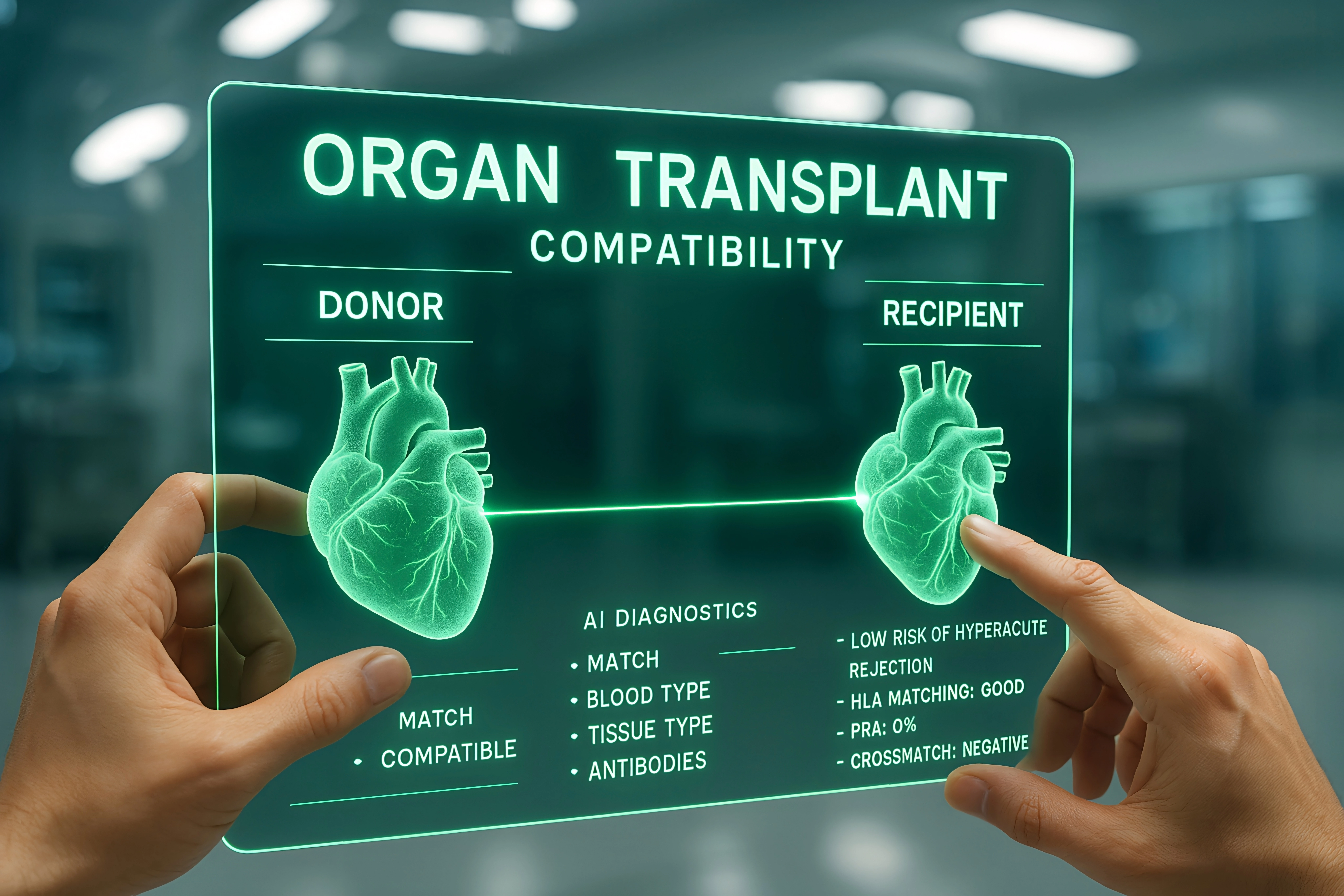
Table of Contents
- 1. Key Takeaways
- 2. What Are HLAs?
- 3. How HLA Markers Are Inherited Within Families
- 4. How HLA Compatibility Changes Across Family Members
- 5. Why Finding a Matched Donor Is Harder Than Most Families Expect
- 6. What Makes a Newborn’s Cord Blood So Important?
- 7. Why Cord Blood Matching Rules Differ From Bone Marrow
- 8. HLA High Resolution Typing: What It Means and Why It Matters
- 9. Planning for the Future Starts at Birth
- 10. An Informed Decision Starts With Cryoviva Life Sciences
- 11. Frequently Asked Questions
- 11.1. Q: What are HLAs in stem cell transplantation?
- 11.2. Q: Why is HLA matching important?
- 11.3. Q: Can siblings be compatible stem cell matches for each other?
- 11.4. Q: Are parents usually a complete HLA match for their child?
- 11.5. Q: Why can cord blood sometimes be used with partial matching?
- 11.6. Q: What is HLA High Resolution typing?
- 11.7. Q: Does Cryoviva Life Sciences offer HLA High Resolution typing?
- 11.8. Q: Why do some families choose cord blood banking?
When a child or family member needs a stem cell transplant, one of the first things doctors assess is donor compatibility. This compatibility is determined by human leukocyte antigens (HLAs), a group of proteins that help the immune system recognise which cells belong in the body and which do not.
In stem cell transplantation, a close HLA match between donor and recipient plays an important role in reducing the risk of immune rejection and improving transplant outcomes. This is why HLA compatibility is carefully evaluated when selecting a donor.
For families considering cord blood banking, understanding how HLA markers are inherited can offer important insight into future family compatibility. It also helps explain why a newborn’s cord blood may become a valuable biological resource not only for the child, but potentially for other family members as well.
Key Takeaways
|
What Are HLAs?
Human leukocyte antigens (HLAs) are proteins found on the surface of most cells in the body. They act as biological identity markers, helping the immune system recognise which cells belong in the body and which do not.
In stem cell transplantation, HLA compatibility between donor and recipient is extremely important. A close HLA match helps the body accept the transplanted stem cells, while a poor match increases the risk of immune complications such as graft-versus-host disease, a condition in which transplanted immune cells attack the recipient’s tissues.
Two main classes of HLA markers are considered during stem cell matching:
- Class I HLAs (HLA-A, HLA-B, HLA-C): Found on the surface of almost all nucleated cells in the body, serving as the first line of biological identity and the primary markers assessed in transplant compatibility screening
- Class II HLAs (HLA-DR, HLA-DQ, HLA-DP): Found primarily on specialised immune cells, critical for directing targeted immune responses and assessed alongside Class I markers in detailed transplant matching
In many allogeneic stem cell transplants, doctors aim for a close HLA match across multiple genetic markers, often referred to as a “10/10 match.” In general, the closer the match, the lower the risk of rejection and transplant-related complications.
Read Also: HLA Typing and Stem Cell Transplants: Understanding the Human Leukocyte Antigen System
How HLA Markers Are Inherited Within Families
HLA markers are inherited from biological parents in a predictable genetic pattern. Every person inherits one HLA haplotype from their biological mother and one from their biological father.
Since each parent can pass down one of two possible haplotypes, there are four possible HLA combinations a child may inherit. This inheritance pattern determines HLA matching within families.
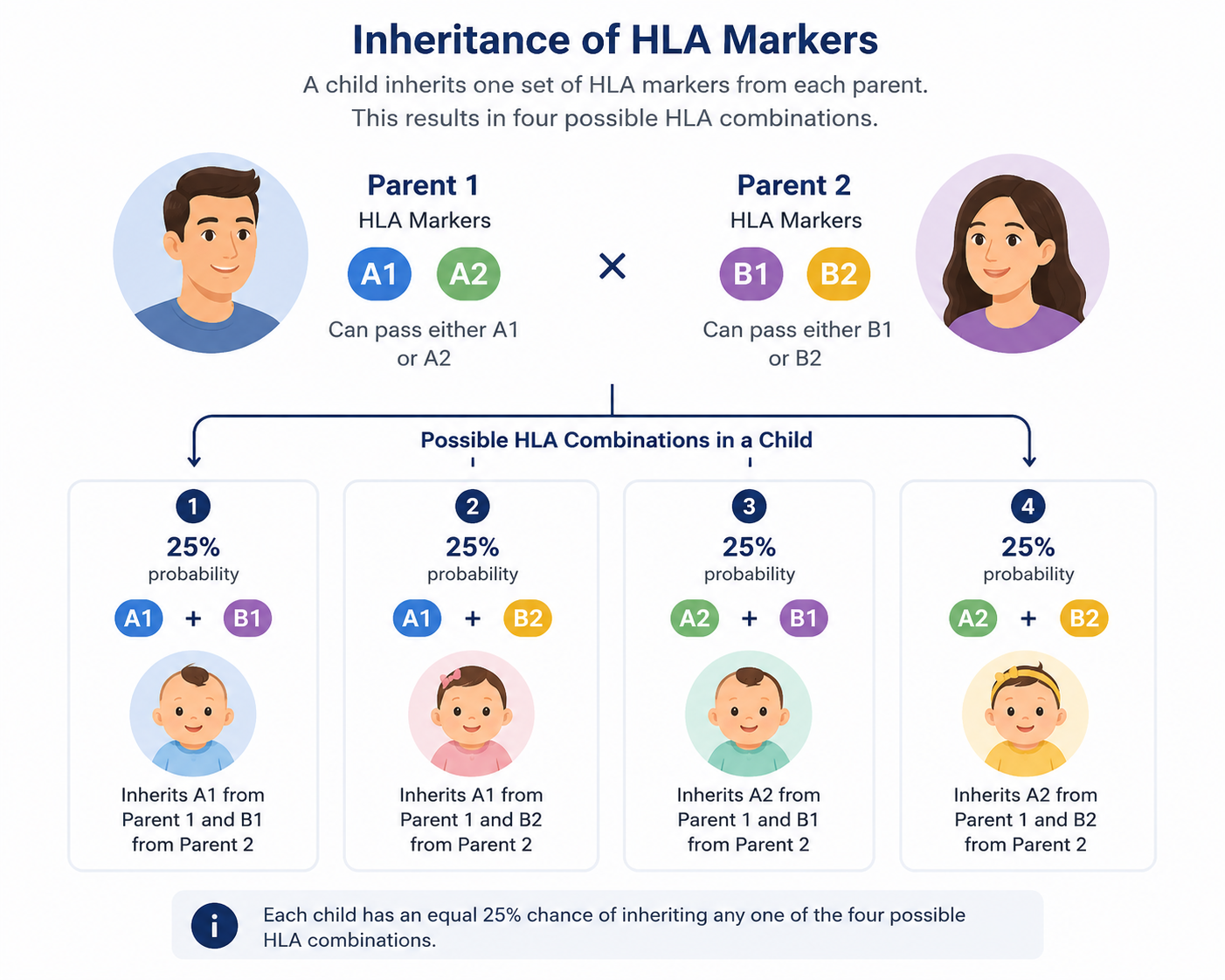
The degree of compatibility can vary between siblings, parents, and extended family members depending on the combination of inherited HLA markers.
How HLA Compatibility Changes Across Family Members
|
Family Member |
HLA Match Probability |
What It Means Clinically |
|
The child (autologous use) |
Perfect match (100%) |
The most compatible stem cell source for the child |
|
Full sibling |
25% full match, 50% partial match |
Most likely family donor after the child |
|
Biological parent |
Guaranteed 50% partial match |
May be usable in certain transplant situations |
|
Half-sibling |
Possible partial match |
Cannot be a full HLA match |
|
Extended family members |
Lower likelihood of matching |
Compatibility decreases as genetic distance increases |
Every biological parent is guaranteed to be a 50% haploidentical match to their child — sharing exactly one haplotype. A full HLA match between parent and child is uncommon, occurring only when both parents happen to share similar HLA alleles by chance.
It is also important to note that using a parent as a donor in haploidentical transplantation often requires more intensive medical management because of the higher risk of immune complications. In comparison, partially matched cord blood may sometimes be better tolerated in certain transplant settings due to the immunological immaturity of neonatal stem cells, making it a clinically relevant option even when the HLA match is not fully complete.
Read Also: HLA Typing and its Role in Stem Cell Banking: A Comprehensive Guide
Why Finding a Matched Donor Is Harder Than Most Families Expect
The inheritance mathematics of HLA matching has a direct and often underappreciated consequence for families facing a transplant need.
About 70% of patients who need a transplant will not have a fully matched donor in their immediate family. For these patients, the search extends to public donor registries - a process that can take months and, for patients from certain ethnic backgrounds, may not yield a closely matched result at all.
A person's ethnic background plays an important role in finding a match. In the same way patients are more likely to match with a sibling because HLA is inherited, they have a better chance of finding a match from an unrelated donor of the same ethnicity. For patients from ethnic minority backgrounds, where donor registry representation is lower, finding a closely matched unrelated donor can be significantly more difficult.
This is where banked cord blood becomes a resource of critical importance. It is already collected, HLA documented, cryopreserved, and available without the delays and uncertainty of a donor search.
What Makes a Newborn’s Cord Blood So Important?
Several factors make a newborn's cord blood uniquely valuable in stem cell compatibility and transplant medicine, including:
- Exact HLA Match for the Child: A child’s own cord blood preserves their exact HLA profile, making it the most genetically compatible stem cell source for them.
- Potential Compatibility Within the Family: Since HLA markers are inherited, preserved cord blood may also offer compatibility value for siblings and other family members.
- Immediate Availability for Future Use (if needed): A banked cord blood unit is already collected, HLA documented, cryopreserved, and ready for potential future use without the delays involved in donor searches.
- A One-Time Collection Opportunity: Cord blood can only be preserved during the few minutes after birth. Once discarded, that exact HLA-matched stem cell source cannot be recovered later in life.
Why Cord Blood Matching Rules Differ From Bone Marrow
Cord blood transplantation does not always require the same degree of HLA matching as bone marrow transplantation. In bone marrow transplants, doctors generally aim for a very close HLA match between donor and recipient to reduce the risk of immune complications. Cord blood transplantation, however, may sometimes proceed successfully even when the match is not fully complete.
One reason for this is that newborn stem cells are considered immunologically less mature. Because of this, they may be less likely to trigger severe graft-versus-host disease compared to other stem cell sources.
This greater flexibility can be clinically important, particularly in situations where finding a closely matched donor is difficult. In some cases, a partially matched cord blood unit may still be considered suitable by transplant specialists.
For patients from ethnic backgrounds that are underrepresented in donor registries, this may also increase access to potentially usable stem cell sources when a closely matched bone marrow donor is not readily available.
Read Also: What are Cord Blood Stem Cells?
HLA High Resolution Typing: What It Means and Why It Matters
Not all HLA testing provides the same level of genetic detail. Standard HLA typing is often used for initial compatibility screening. High Resolution HLA typing, however, analyses HLA markers at the allele level, providing a far more precise assessment of donor compatibility.
High Resolution HLA typing plays an important role in stem cell transplantation because accurate matching helps improve donor selection and reduce the risk of transplant-related complications. It is particularly important in allogeneic haematopoietic stem cell transplantation, where close HLA compatibility between donor and recipient is critical.
In transplant medicine, this added precision can help:
- Improve donor selection
- Reduce the risk of undetected mismatches
- Support more accurate transplant planning
For families choosing cord blood banking, High Resolution HLA typing creates a detailed genetic compatibility record for the stored cord blood unit at the time of preservation.
Cryoviva Life Sciences offers HLA High Resolution typing as an additional service alongside cord blood preservation plans, helping families preserve both the stem cells and a detailed HLA compatibility profile for future medical reference.
Planning for the Future Starts at Birth
For many families, cord blood banking is about preserving a stem cell source that may hold future medical value for the child and potentially for other family members.
A newborn’s cord blood carries the child’s exact HLA profile and is collected and preserved at birth, making it readily available if ever needed in the future. This can be especially important for families with a medical history involving blood disorders, immune conditions, or certain cancers that may require stem cell transplantation.
As transplant medicine and stem cell research continue to advance, more families are beginning to view cord blood banking as part of long-term health planning rather than a decision based only on current medical needs.
Since cord blood can only be collected during the few minutes after delivery, understanding family compatibility, preservation options, and the potential future relevance of cord blood before birth can help parents make a more informed decision.
An Informed Decision Starts With Cryoviva Life Sciences
At Cryoviva Life Sciences, cord blood preservation is supported by internationally accredited processing standards, GMP-certified laboratory infrastructure, continuous cryogenic monitoring, and optional HLA High Resolution typing services for detailed genetic compatibility assessment.
Families are encouraged to explore available preservation plans before their expected delivery date and make an informed decision based on their family’s needs and medical considerations.
To learn more about stem cell preservation and banking, simply call 1800 101 9587 (toll-free) or visit Cryoviva Life Sciences to speak with a Cryoviva stem cell specialist.
Frequently Asked Questions
Q: What are HLAs in stem cell transplantation?
HLAs are proteins that help the immune system identify which cells belong in the body. In transplantation, they help determine donor compatibility.
Q: Why is HLA matching important?
A closer HLA match may help reduce the risk of immune rejection and improve transplant outcomes.
Q: Can siblings be compatible stem cell matches for each other?
Yes. Since HLA markers are inherited from parents, siblings may share compatible HLA patterns that can make stem cell transplantation possible in certain situations.
Q: Are parents usually a complete HLA match for their child?
No. Parents are typically partial matches because a child inherits only part of their HLA profile from each parent.
Q: Why can cord blood sometimes be used with partial matching?
Cord blood stem cells are considered immunologically less mature, which may allow greater flexibility in certain transplant situations.
Q: What is HLA High Resolution typing?
It is a detailed form of HLA testing that provides more precise genetic compatibility information for transplant planning.
Q: Does Cryoviva Life Sciences offer HLA High Resolution typing?
Yes. Cryoviva Life Sciences offers HLA High Resolution typing as an additional service alongside cord blood preservation plans.
Q: Why do some families choose cord blood banking?
Many families choose cord blood banking to preserve a genetically related stem cell source that may hold future medical relevance for them.
.jpg)
.jpg)
 Enquiry
 Email
Email Phone
Phone
 Whatsapp