
What is the Best Source for Mesenchymal Stem Cells? Umbilical Cord vs. Bone Marrow
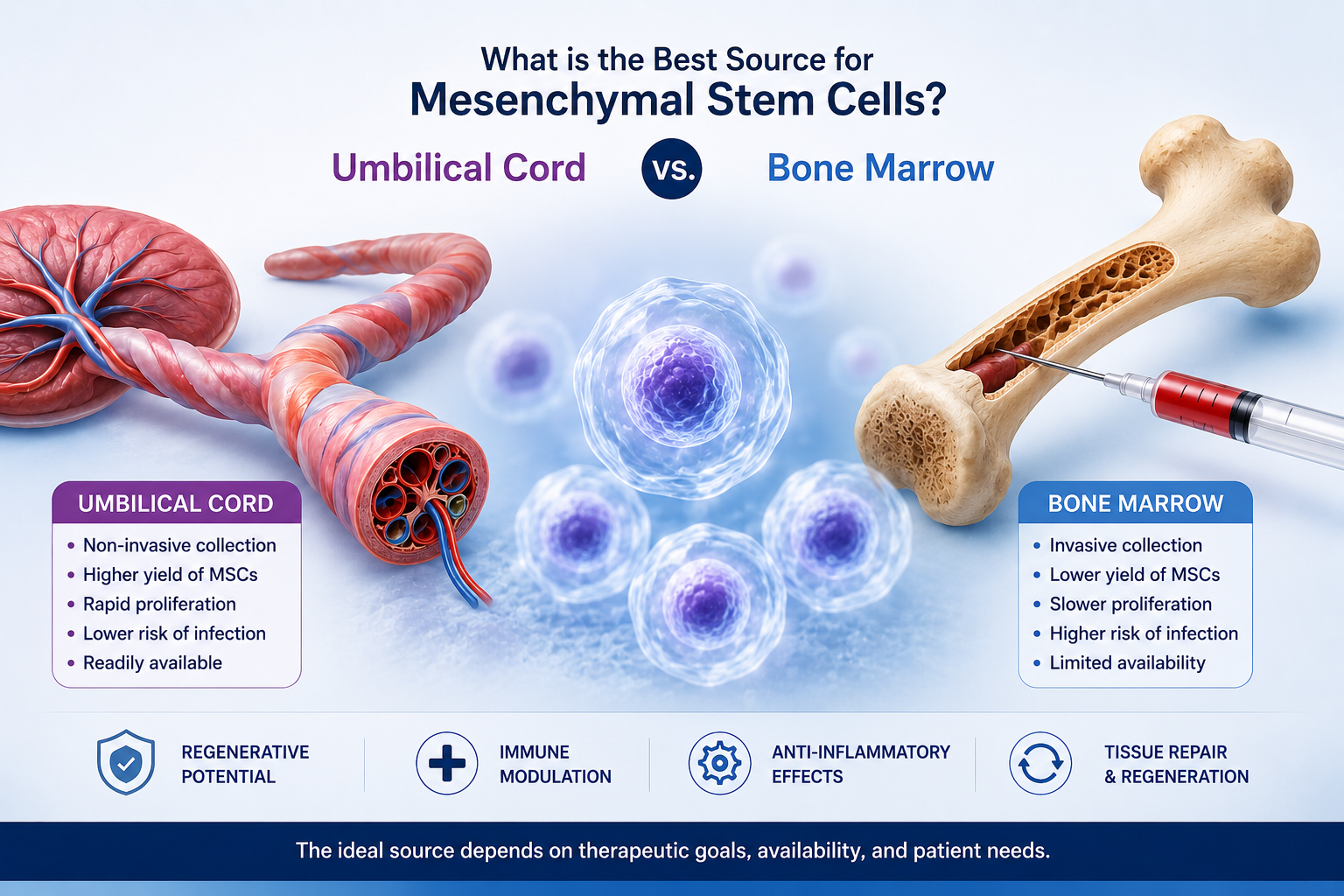
Table of Contents
- 1. What Are Mesenchymal Stem Cells?
- 2. What Are the Main Sources of Mesenchymal Stem Cells?
- 3. Bone Marrow MSCs: The Traditional Source and Its Limitations
- 3.1. Collection Is Invasive and Carries Risks
- 3.2. Cell Quality May Decline With Age
- 3.3. Availability Is Limited
- 4. Umbilical Cord Tissue-Derived MSCs: A Promising Perinatal Source
- 4.1. Non-Invasive Collection With No Donor Procedure
- 4.2. High Proliferative Capacity
- 4.3. Lower Immunogenicity
- 4.4. Lower Expression of Cellular Senescence Markers
- 4.5. Evidence From Clinical Research
- 5. Umbilical Cord Vs Bone Marrow-Derived MSCs: A Quick Overview
- 6. The Cord Lining Advantage: A Dual-Cell Source
- 7. Potential Clinical Applications Being Investigated for Umbilical Cord Tissue MSCs
- 7.1. Orthopaedic and Musculoskeletal Conditions
- 7.2. Cardiovascular Conditions
- 7.3. Autoimmune and Inflammatory Conditions
- 7.4. Neurological Conditions
- 8. Why the Collection Window Matters
- 9. How Cryoviva Life Sciences Supports Stem Cell Preservation
- 9.1. Quality-Focused Processing and Storage
- 9.2. Access to Advanced Processing Technology
- 9.3. Supporting Future Access to Preserved Stem Cells
- 10. A Decision That Must Be Made Before Your Child's Birth
- 11. Frequently Asked Questions
- 11.1. Q: What are mesenchymal stem cells and where are they found?
- 11.2. Q: What is the difference between bone marrow MSCs and umbilical cord MSCs?
- 11.3. Q: Are umbilical cord tissue MSCs better than bone marrow MSCs?
- 11.4. Q: What is mesenchymal stem cell therapy and is it available in India?
- 11.5. Q: What is the cord lining and why does it matter for MSC preservation?
- 11.6. Q: Can cord tissue MSCs be used by family members other than the child?
- 11.7. Q: Why Does Cryoviva Life Sciences Preserve Cord Tissue Alongside Cord Blood?
Mesenchymal stem cells (MSCs) have attracted significant attention in regenerative medicine due to their ability to self-renew, support tissue repair, and modulate immune responses. As research into stem cell-based therapies continues to expand, MSCs are being studied for their potential role in supporting the treatment of a wide range of conditions involving inflammation, tissue damage, and degenerative changes.
While MSCs can be isolated from a variety of tissues, including adipose tissue, placenta, dental pulp, and umbilical cord tissue, bone marrow has historically served as the most extensively studied and clinically utilized source. Owing to its established safety profile and extensive body of research, bone marrow-derived MSCs (BM-MSCs) have long been regarded as the benchmark for MSC-based therapies. However, increasing interest has been directed toward umbilical cord-derived MSCs (UC-MSCs), which offer several practical and biological advantages, including non-invasive procurement, greater proliferative capacity, and potent immunomodulatory properties. Consequently, comparative studies evaluating the biological characteristics, therapeutic potential, and clinical applicability of BM-MSCs and UC-MSCs have become a prominent area of investigation in regenerative medicine.
Understanding this comparison is also highly relevant for families considering umbilical cord tissue preservation at birth. The tissue collected and stored following delivery represents more than a biological specimen; it serves as a source of mesenchymal stem cells (MSCs) that are being extensively investigated for their regenerative and immunomodulatory properties. Although many potential applications remain under clinical evaluation, ongoing research continues to explore the role of umbilical cord-derived MSCs in regenerative medicine, tissue repair, and the development of future therapeutic strategies. As a result, understanding how these cells compare with MSCs derived from other sources, particularly bone marrow, is important for both scientific and clinical decision-making.
What Are Mesenchymal Stem Cells?
Mesenchymal stem cells (MSCs) are multipotent stromal cells capable of self-renewal and differentiation into multiple cell types, including bone, cartilage, fat, and connective tissue. What makes MSCs particularly significant in regenerative medicine and cell therapy research is not only their differentiation capacity. They are also known for their immunomodulatory properties, including the ability to regulate immune responses, reduce inflammation, and support an environment that may promote tissue repair. MSCs have been shown to exhibit characteristics such as high proliferative capacity, secretion of pro-angiogenic and anti-inflammatory factors, and low immunogenicity, making them an important focus of ongoing research into cell-based therapies.
These properties are present across MSCs from multiple sources. However, the extent to which they are expressed may vary depending on the source of the cells.
Read Also: What Is a Mesenchymal Stem Cell?
What Are the Main Sources of Mesenchymal Stem Cells?
Mesenchymal stem cells (MSCs) have been successfully isolated from a variety of tissues throughout the body, with each source offering distinct advantages in terms of collection methods, availability, proliferative capacity, and biological characteristics.
Bone Marrow: Historically the most extensively studied and clinically utilized source of MSCs. Bone marrow-derived MSCs (BM-MSCs) are typically obtained through bone marrow aspiration, an invasive procedure commonly performed under local or general anaesthesia.
Umbilical Cord Tissue (Wharton's Jelly): A rich perinatal source of MSCs collected non-invasively from the umbilical cord following birth. These cells have attracted considerable attention because of their high proliferative potential and immunomodulatory properties.
Umbilical Cord Lining: A unique source containing both mesenchymal stem cells and epithelial stem cells. Like umbilical cord tissue, it can only be collected at the time of delivery.
Adipose Tissue: MSCs can be isolated from fat tissue obtained through liposuction procedures. Adipose-derived MSCs are readily available in adults but require an invasive collection process.
Placenta: Collected after childbirth, the placenta contains MSC populations with distinctive biological and immunological characteristics that continue to be investigated for regenerative medicine applications.
Dental Pulp: Found within the soft tissue of teeth, dental pulp-derived MSCs represent another adult stem cell source and are being explored for their potential role in tissue regeneration and repair.
Each MSC source presents a different balance of accessibility, collection requirements, cell yield, and biological properties. Among the various sources currently available, bone marrow and umbilical cord tissue remain the two most extensively studied and frequently compared in regenerative medicine research, making them central to discussions regarding the future development of MSC-b
Bone Marrow MSCs: The Traditional Source and Its Limitations
Bone marrow has long served as the benchmark source for mesenchymal stem cell research. Much of what is known about MSC biology and their potential therapeutic applications has been established through studies involving bone marrow-derived MSCs. Its extensive research history has contributed significantly to the understanding of MSC characteristics and clinical potential.
However, despite being one of the most extensively studied sources of MSCs, bone marrow presents certain practical and biological limitations that have encouraged researchers to explore alternative sources. These considerations include:
Collection Is Invasive and Carries Risks
Harvesting BM-MSCs involves an invasive procedure that may be associated with risks such as infection, bleeding, and post-procedural pain. Collection requires aspiration from the posterior iliac crest of the hip bone, typically performed under general or spinal anaesthesia. Recovery times vary, and donor-site complications may occur.
Cell Quality May Decline With Age
Research suggests that the biological properties of bone marrow-derived MSCs (BM-MSCs) may decline with advancing donor age. Studies have reported reduced proliferative capacity, altered differentiation potential, and increased markers of cellular senescence in MSCs obtained from older individuals. These age-related changes are important considerations in research involving autologous BM-MSC therapies.
Availability Is Limited
The yield of MSCs obtained from bone marrow aspirate is relatively low, and the invasive nature of collection can limit the amount of material available. Laboratory expansion of cells is possible, but it requires additional processing and may introduce variability depending on manufacturing and culture conditions.
Umbilical Cord Tissue-Derived MSCs: A Promising Perinatal Source
The umbilical cord is recognised as an important source of MSCs in regenerative medicine research. Several of its biological characteristics have made it a focus of ongoing investigation, particularly when compared with traditionally used sources such as bone marrow.
Here’s why umbilical cord tissue is considered a promising perinatal source of MSCs:
Non-Invasive Collection With No Donor Procedure
Umbilical cord-derived MSCs (UC-MSCs) are collected from umbilical cord tissue after birth through a completely non-invasive process that poses no risk to either the mother or newborn. Unlike bone marrow collection, no surgery, anaesthesia, or recovery period is required. Tissue that would otherwise be discarded after delivery can be preserved as a valuable source of MSCs for future research and potential therapeutic applications.
High Proliferative Capacity
Studies have shown that UC-MSCs demonstrate strong proliferative and expansion potential under laboratory conditions when compared with some adult tissue-derived MSC sources. This characteristic has contributed to growing interest in their use for research and future cell-based applications.
Lower Immunogenicity
Research has shown that UC-MSCs express lower levels of HLA class I molecules than BM-MSCs. Lower expression of these immune markers may reduce the likelihood of immune recognition and has made UC-MSCs an important area of investigation for allogeneic cell therapy applications.
Lower Expression of Cellular Senescence Markers
Studies have reported that umbilical cord-derived MSCs (UC-MSCs) exhibit lower expression of cellular senescence-associated markers, including p53, p21, and p16, compared with bone marrow-derived and adipose tissue-derived MSCs. Reduced expression of these markers is generally associated with a more youthful cellular phenotype and may contribute to enhanced proliferative capacity. However, the biological and clinical significance of these differences continues to be investigated.
Evidence From Clinical Research
A study published in the Journal of Personalised Medicine in February 2024 reported comparable clinical outcomes at 12 months between patients treated with umbilical cord-derived MSCs and those receiving bone marrow-derived MSCs, despite differences in patient characteristics between the groups. These findings contribute to the growing body of evidence supporting continued research into umbilical cord-derived MSCs and their potential therapeutic applications.
Read Also: How Does Mesenchymal Stem Cell Therapy Work?
Umbilical Cord Vs Bone Marrow-Derived MSCs: A Quick Overview
|
Feature |
Bone Marrow MSCs |
Umbilical Cord MSCs |
|
Collection Method |
Bone marrow aspiration, typically performed under local, spinal, or general anaesthesia |
Non-invasive collection of umbilical cord tissue after birth |
|
Donor Procedure |
Requires an invasive collection procedure with potential procedural risks |
No collection procedure required for the mother or newborn |
|
Cell Yield |
Relatively low frequency of MSCs in harvested bone marrow |
Higher proliferative and expansion potential reported in laboratory studies |
|
Proliferative Capacity |
May decline with advancing donor age |
High proliferative capacity reported in multiple studies |
|
HLA Class I Expression |
Higher expression levels reported in comparative studies |
Lower expression levels reported in comparative studies |
|
Cellular Senescence Markers |
May increase with donor age |
Lower expression of senescence markers reported in comparative studies |
|
Impact of Donor Age |
Biological characteristics may be influenced by age-related cellular changes |
Cells are collected at birth before age-related cellular changes occur |
|
Collection Window |
Available throughout adulthood |
Available only at the time of birth |
|
Ethical Considerations |
Generally considered ethically acceptable when collected with informed consent |
Obtained from tissue that is typically discarded after delivery and is generally considered ethically acceptable |
|
Research History |
Longest-established and most extensively studied MSC source |
An increasingly studied source of MSCs, supported by a growing body of research demonstrating its distinctive biological characteristics. |
Read Also: Bone Marrow vs Cord blood Stem Cells
The Cord Lining Advantage: A Dual-Cell Source
Within umbilical cord tissue, the cord lining, which forms the outermost membrane of the umbilical cord, has attracted growing interest as a source of stem cells.
Many cord tissue preservation approaches focus primarily on Wharton's jelly, which is a recognised source of mesenchymal stem cells (MSCs). The cord lining has been shown to contain both mesenchymal stem cells and epithelial stem cells, providing access to multiple stem cell populations from the same tissue source. Research has reported that cord lining-derived epithelial stem cells can retain key stem cell characteristics through multiple replication cycles and exhibit immunomodulatory properties that continue to be investigated for their potential therapeutic applications.
Studies have also reported that mesenchymal stromal cells isolated from whole umbilical cord tissue may demonstrate faster proliferation and longer survival in laboratory culture compared with cells isolated exclusively from Wharton's jelly. These findings suggest that different regions of the umbilical cord may possess distinct biological characteristics that warrant further investigation.
The cord lining is increasingly being studied alongside Wharton's jelly as part of the broader potential of umbilical cord tissue. Ongoing research continues to explore the unique properties of the different stem cell populations found within these tissues and their possible future applications in regenerative medicine.
Potential Clinical Applications Being Investigated for Umbilical Cord Tissue MSCs
The biological characteristics of umbilical cord tissue-derived MSCs have generated significant interest in their potential therapeutic applications. As a result, they are being studied across a range of clinical and translational research areas. Current areas of investigation include:
Orthopaedic and Musculoskeletal Conditions
Umbilical cord tissue-derived MSCs have demonstrated the ability to differentiate into chondrocytes, the specialised cells responsible for cartilage formation. This characteristic has led to growing interest in their potential role in cartilage repair and musculoskeletal disorders. Clinical studies involving knee osteoarthritis have reported improvements in pain and functional outcomes following MSC-based interventions, contributing to ongoing research in this area.
Primary Source: Wang Y. et al. "Human Umbilical Cord Mesenchymal Stem Cells for Knee Osteoarthritis: A Systematic Review and Meta-analysis." Stem Cell Research & Therapy, 2023.
Link:
Journal of Orthopaedic Surgery and Research (2023)
Cardiovascular Conditions
The regenerative and paracrine properties of UC-MSCs have made them a subject of investigation in cardiovascular medicine. Researchers are exploring their potential role in supporting cardiac repair and improving heart function following injury. A 2024 systematic review and meta-analysis of randomised controlled trials reported improvements in left ventricular ejection fraction among patients receiving UC-MSC therapy, highlighting continued interest in this field of research.
Primary source: Bartolucci J, Verdugo FJ, Gonzalez PL, et al. Safety and Efficacy of the Intravenous Infusion of Umbilical Cord Mesenchymal Stem Cells in Patients with Heart Failure (RIMECARD Trial).
Link:
RIMECARD Trial (Circulation Research)
Autoimmune and Inflammatory Conditions
UC-MSCs possess immunomodulatory properties that may influence immune system activity and inflammatory responses. Consequently, they are being investigated in conditions associated with immune dysregulation, including rheumatoid arthritis, systemic lupus erythematosus, and inflammatory bowel disease. Researchers continue to evaluate their potential role in regulating immune responses while assessing long-term safety and clinical outcomes.
Primary Source:
Wang M, Yuan Q, Xie L. Mesenchymal Stem Cell-Based Immunomodulation: Properties and Clinical Application. Stem Cells International, 2018.
Link:
Mesenchymal Stem Cell-Based Immunomodulation (PMC
Additional recent review:
Chen B, et al. Recent Advances in the Role of Mesenchymal Stem Cells as Immunomodulators in Autoimmune Diseases. Frontiers in Immunology, 2024.
Link:
Frontiers in Immunology (2024
Neurological Conditions
Researchers are also exploring the potential applications of UC-MSCs in neurological disorders. Ongoing clinical and preclinical studies are investigating their use in conditions such as cerebral palsy, spinal cord injury, stroke, and neurodegenerative diseases. Interest in this area is driven by the ability of MSCs to secrete bioactive factors that may support tissue repair and modulate inflammatory processes within the nervous system.
Recommended source:
ClinicalTrials.gov registry showing ongoing studies involving UC-MSCs in neurological and regenerative applications.
Link:
ClinicalTrials.gov – UC-MSC Research Studies
Important: The potential therapeutic applications discussed herein are the subject of ongoing scientific and clinical investigation. Additional preclinical and clinical studies are necessary to further assess their safety, efficacy, and long-term outcomes. Except where specifically approved by applicable regulatory authorities, therapies involving umbilical cord-derived mesenchymal stem cells (UC-MSCs) are generally not considered established standards of care and may remain investigational in nature. References to potential applications should not be interpreted as evidence of proven clinical benefit, nor as a guarantee of future therapeutic use.
Why the Collection Window Matters
While umbilical cord tissue-derived MSCs offer several biological advantages, the opportunity to collect them is limited to a single window, which is the time of birth.
Unlike bone marrow, which can be collected later in life through an invasive procedure, cord tissue is available only during the short period following delivery. Once the umbilical cord is discarded, the opportunity to preserve the stem cells contained within that tissue is no longer available. For this reason, families interested in cord tissue preservation must make the decision before or at the time of birth.
Preserving cord tissue allows families to store stem cells that are being actively studied for their proliferative capacity, immunomodulatory properties, and potential therapeutic applications. Ongoing research continues to evaluate how these characteristics may contribute to future advances in regenerative medicine and cell-based therapies.
How Cryoviva Life Sciences Supports Stem Cell Preservation
Choosing a stem cell banking provider involves evaluating factors such as laboratory standards, processing technologies, storage infrastructure, and regulatory compliance. These considerations can play an important role in the long-term preservation and monitoring of collected samples.
Quality-Focused Processing and Storage
At Cryoviva Life Sciences, cord blood and cord tissue samples are processed in a GMP-certified laboratory and preserved under continuously monitored cryogenic storage conditions. The company operates under licences and regulatory requirements applicable to its activities and maintains quality management systems aligned with internationally recognised standards. Cryoviva reports are compliant with relevant guidelines and accreditation requirements, including those associated with the WHO, ISO, US FDA, AABB, NABL, and CAP, where applicable.
Access to Advanced Processing Technology
Cryoviva Life Sciences is the exclusive India partner for PrepaCyte®-CB cord blood processing technology, available with the Blessing, Supra Superior, and Supra Ultimate plans. Processing outcomes may vary depending on factors such as collection quality, sample volume, and laboratory protocols.
Supporting Future Access to Preserved Stem Cells
Cryoviva Life Sciences has facilitated the release of preserved cord blood units for use in treatment protocols and clinical applications involving conditions such as acute lymphoblastic leukaemia, cerebral palsy, medulloblastoma, and thalassaemia major. These releases demonstrate how stem cells preserved at birth may be accessed in the future when clinically appropriate and subject to medical evaluation and applicable treatment requirements.
A Decision That Must Be Made Before Your Child's Birth
Research into mesenchymal stem cells continues to evolve, with umbilical cord tissue remaining an important source of stem cells for ongoing scientific and clinical investigation. Because cord blood and cord tissue can only be collected at the time of birth, families who are considering preservation should evaluate their options well in advance of their expected delivery date.
Understanding the current evidence, collection procedures, storage options, and associated costs can help families make an informed decision based on their individual circumstances and future preferences.
For additional information about cord blood and cord tissue preservation, families may consult with a qualified Cryoviva Life Sciences representative prior to delivery. Further details regarding collection, processing, and storage services are available by calling 1800 101 9587 (toll-free) or visiting cryovivalifesciences.in
Frequently Asked Questions
Q: What are mesenchymal stem cells and where are they found?
Mesenchymal stem cells (MSCs) are multipotent stromal cells capable of self-renewal and differentiation into multiple tissue types, including bone, cartilage, and connective tissue. They have been identified in several tissues, including bone marrow, umbilical cord tissue, adipose tissue, placenta, and dental pulp, each with distinct biological characteristics that continue to be studied for their potential therapeutic applications.
Q: What is the difference between bone marrow MSCs and umbilical cord MSCs?
Bone marrow MSCs are collected through an invasive procedure, and research suggests their biological characteristics may be influenced by donor age. Umbilical cord tissue MSCs are collected non-invasively at birth from tissue that would otherwise be discarded after delivery. Studies have reported differences in proliferative capacity, immunological characteristics, and cellular senescence markers between these sources.
Q: Are umbilical cord tissue MSCs better than bone marrow MSCs?
Both bone marrow-derived MSCs (BM-MSCs) and umbilical cord tissue-derived MSCs (UC-MSCs) are extensively studied in regenerative medicine. Research has shown that UC-MSCs possess certain biological characteristics, including non-invasive collection, high proliferative capacity, and lower expression of some cellular senescence markers. Conversely, BM-MSCs have a longer history of research and clinical investigation and remain one of the most extensively studied MSC sources. The suitability of a particular MSC source depends on the specific research, clinical context, and intended use, and comparative studies continue to evaluate the advantages and limitations of each.
Q: What is mesenchymal stem cell therapy and is it available in India?
Mesenchymal stem cell therapy refers to the use of MSCs in research and clinical applications aimed at understanding their potential role in tissue repair and immune modulation. In India, stem cell-based therapies for most conditions remain investigational and are regulated in accordance with applicable national guidelines and regulatory requirements. Patients should consult qualified medical professionals regarding approved treatment options.
Q: What is the cord lining and why does it matter for MSC preservation?
The cord lining is the outermost membrane of the umbilical cord. Research has shown that it contains both mesenchymal stem cells and epithelial stem cells, providing access to multiple stem cell populations from a single tissue source. These cells continue to be studied for their biological properties and potential future applications in regenerative medicine.
Q: Can cord tissue MSCs be used by family members other than the child?
Researchers continue to investigate the potential applications of cord tissue-derived MSCs, including their possible use beyond the donor child. Any future use would depend on factors such as medical indication, compatibility requirements, regulatory considerations, and specialist evaluation. Many potential applications remain investigational, and the suitability of stored cord tissue for any future use cannot be guaranteed.
Q: Why Does Cryoviva Life Sciences Preserve Cord Tissue Alongside Cord Blood?
Cord blood and cord tissue contain different types of stem cells with distinct biological characteristics. Cord blood is a source of haematopoietic stem and progenitor cells, which have established applications in transplant medicine. Cord tissue is a source of mesenchymal stem cells (MSCs), which continue to be studied for their regenerative and immunomodulatory properties.
By preserving both cord blood and cord tissue at birth, families have the opportunity to store two complementary stem cell sources from a single collection event. Any future use of these stored cells would depend on factors such as medical indication, clinical suitability, regulatory requirements, and the state of scientific and clinical evidence available at that time.




 Enquiry
 Email
Email Phone
Phone
 Whatsapp