
If the Science Is Promising, Why Isn’t Cord Blood and Tissue Storage More Common?

Table of Contents
- 1. Understanding the Potential of Umbilical Cord Blood and Tissue Storage
- 2. Why Adoption Has Not Kept Pace with Scientific Progress
- 2.1. 1. Limited Awareness Beyond the Delivery Room
- 2.2. 2. Misconceptions About Immediate Use
- 2.3. 3. Confusion Between Cord Blood and Cord Tissue
- 2.4. 4. Cost Considered an Expense, Not as an Insurance
- 2.5. 5. Lack of Universal Clinical Guidelines
- 3. Reframing the Conversation Around Storage Tissue
- 4. How Cryoviva Life Sciences is Building Confidence in Cord Blood and Tissue Banking
- 5. Conclusion: Underutilized, Not Unimportant
- 6. Frequently Asked Questions
- 6.1. Q. Is cord tissue preservation different from cord blood storage?
- 6.2. Q. What is umbilical cord lining, and why is it important?
- 6.3. Q. Can cord tissue be stored even if cord blood is already banked?
- 6.4. Q. Is storage tissue useful only for the child?
- 6.5. Q. How long can cord blood and tissue be preserved?
- 6.6. Q. Is cord blood and tissue banking regulated in India?
- 6.7. Q. What should parents consider before choosing cord tissue preservation?
- 6.8. Q. Why do some parents choose Cryoviva Life Sciences?
The science behind cord blood and cord tissue storage has progressed steadily over the past few decades, opening new conversations around regenerative and preventive medicine. Research continues to explore how stem cells derived from the umbilical cord may support future therapies. And yet, adoption rates remain modest. For many parents, the decision to store cord blood and tissue still feels uncertain, optional, or easily deferred. In this article, we will examine this contrast between scientific momentum and parental hesitation, taking a deeper look at how medical potential, perception, and decision-making intersect at the time of birth.
Understanding the Potential of Umbilical Cord Blood and Tissue Storage
Umbilical cord blood and cord tissue are recognised as valuable, long-term biological resources. Their significance lies not only in their established medical use today, but also in their potential to support future advances as research in regenerative medicine continues to evolve.
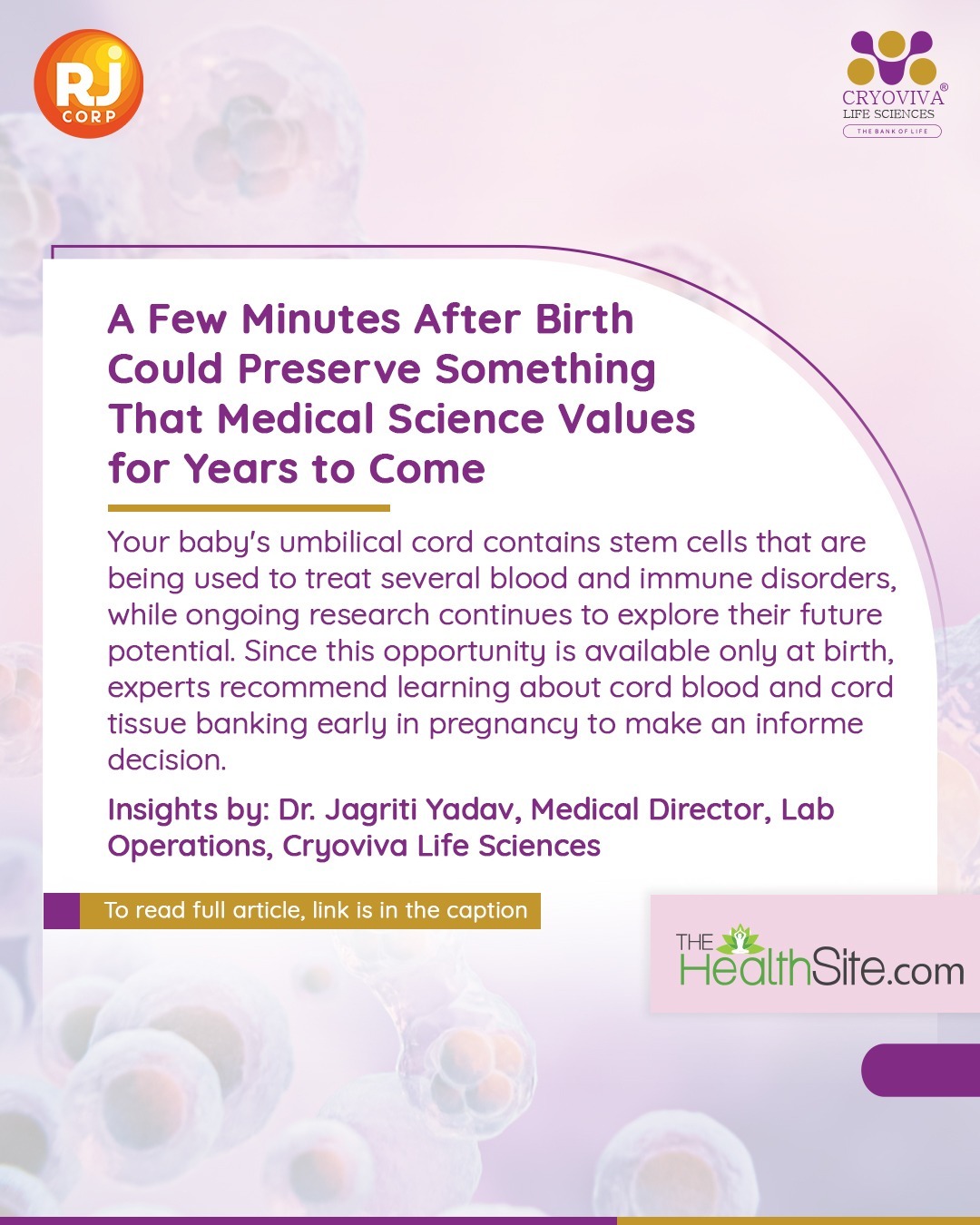
Umbilical cord blood is rich in hematopoietic stem cells, which are already used in the treatment of certain blood and immune disorders. Cord tissue, which contains mesenchymal stem cells found in structures such as Wharton’s jelly and the umbilical cord lining, offers a different form of biological value. These cells are being widely studied for their regenerative, anti-inflammatory, and tissue-supporting properties.
Together, cord blood and tissue banking provide complementary benefits. While cord blood stem cells primarily support the formation of blood and immune cells, cord tissue-derived stem cells are being explored in areas such as orthopaedics, neurology, cardiac repair, and inflammatory research. Many ongoing studies focus on how these cells help create a supportive healing environment within the body rather than directly replacing damaged tissue.
Most importantly, the opportunity to preserve both cord blood and cord tissue exists only once: at birth. Unlike adult stem cells, which may require invasive collection and may vary in quality, storage tissue from the umbilical cord is young, adaptable, and collected safely, without risk to the mother or newborn. Their value lies as much in this unique timing as in their biological potential.
Related: Umbilical Cord Preservation: Benefits, Uses, and Cost in India
Why Adoption Has Not Kept Pace with Scientific Progress
If the medical potential is so widely discussed, why do storage rates remain relatively low? Several interrelated factors contribute to this hesitation.
1. Limited Awareness Beyond the Delivery Room
For many parents, the first introduction to cord blood and tissue banking occurs late in pregnancy, often during hospital admission or prenatal classes. At this stage, families are already processing multiple medical decisions, leaving little room for understanding complex concepts such as stem cell biology.
Unlike vaccinations, nutrition counseling, or newborn screenings, cord blood and tissue storage are rarely integrated into broader public health education. As a result, awareness exists, but comprehension often does not.
2. Misconceptions About Immediate Use
A common assumption is that stored stem cells must be used soon after birth to be meaningful. This belief overlooks the preventive nature of stem cell preservation. Cord tissue preservation is not intended to solve an immediate medical problem; it exists to preserve biological options that may become relevant years or decades later.
Preventive healthcare decisions that do not promise immediate outcomes are often harder to prioritize, particularly when they involve unfamiliar science.
3. Confusion Between Cord Blood and Cord Tissue
Many parents believe cord blood alone is sufficient, or that cord tissue storage is experimental or optional. In reality, cord blood and cord tissue contain different stem cell populations with distinct biological functions.
The lack of clear differentiation in public conversations contributes to uncertainty. Without understanding why cord blood and tissue banking exists as a combined approach, parents may default to inaction rather than risk making the “wrong” choice.
4. Cost Considered an Expense, Not as an Insurance
Cord blood and tissue banking is often compared to delivery add-ons or short-term maternity costs. When viewed in isolation, this framing reduces perceived value. Rarely is it discussed as a once-in-a-lifetime medical opportunity that cannot be recreated later.
Healthcare decisions tied to future probability rather than present necessity often face this challenge, particularly in systems that prioritize treatment over prevention.
5. Lack of Universal Clinical Guidelines
Unlike routine screenings or immunizations, there is no universal medical mandate for cord blood and tissue storage. Physicians may present it as an option rather than a recommendation, which some families interpret as a signal of low importance.
Neutral guidance, while ethically appropriate, can unintentionally reinforce hesitation in the absence of structured education.
Related: Essential Checklist for Preserving Baby Cord Blood
Reframing the Conversation Around Storage Tissue
One of the most important shifts needed is how storage tissue is discussed. Cord blood and cord tissue banking are not about predicting illness or guaranteeing treatment outcomes. It is about preserving a biological resource at a moment when access is possible and risk-free.
The question for parents is not whether stored stem cells will ever be used, but whether the opportunity to preserve them can ever be regained. In this context, cord tissue preservation becomes less about fear and more about informed foresight.
As regenerative medicine evolves, therapies may change, but the biological quality of newborn stem cells remains constant. Preserving them is a decision rooted in possibility, not certainty.
How Cryoviva Life Sciences is Building Confidence in Cord Blood and Tissue Banking
In a field where uncertainty and expectation coexist, trust plays a defining role. Cryoviva Life Sciences approaches cord blood and tissue banking with a focus on transparency, education, and ethical counseling rather than urgency-driven decision-making.
The organization emphasizes helping families understand the difference between cord blood and cord tissue, the role of umbilical cord lining-derived stem cells, and the realistic scope of current and emerging research. By clarifying limitations alongside potential, Cryoviva Life Sciences supports informed choice rather than persuasion.
Quality standards, traceability, and long-term preservation protocols form the foundation of responsible cord tissue preservation. Equally important is the recognition that this decision is personal and must align with each family’s values, medical history, and comfort with preventive healthcare.
Rather than positioning storage as a promise, Cryoviva Life Sciences frames it as a process: one built on scientific integrity, regulatory compliance, and continued engagement with evolving medical knowledge.
Related: Stem Cell Preservation Cost in India: Everything You Need to Know
Conclusion: Underutilized, Not Unimportant
The relatively low adoption of cord blood and tissue banking does not reflect a lack of scientific relevance. Instead, it highlights gaps in awareness, timing, and how preventive healthcare decisions are communicated.
As regenerative medicine continues to develop, the conversation around cord blood and tissue storage is likely to mature. Greater clarity, better education, and realistic expectations can help families evaluate this option without pressure or confusion. Ultimately, cord blood and tissue banking is neither essential for everyone nor irrelevant for most. It is a once-in-a-lifetime opportunity that deserves thoughtful consideration, guided by science, not assumptions.
At Cryoviva Life Sciences, we call it “The Bank of Life”, a promise of care, security, and hope for your growing family. If you would like to explore this further, our team is here to guide you. Contact Cryoviva Life Sciences at 1800-101-9587 or +91 8130800211, or write to us at [email protected].
Frequently Asked Questions
Q. Is cord tissue preservation different from cord blood storage?
Yes. Cord blood contains blood-forming stem cells, while cord tissue contains mesenchymal stem cells found in structures such as Wharton’s jelly and the umbilical cord lining. These cell types serve different biological functions.
Q. What is umbilical cord lining, and why is it important?
The umbilical cord lining contains stem cells with regenerative and anti-inflammatory properties. These cells are being studied for applications beyond blood disorders, including tissue repair.
Q. Can cord tissue be stored even if cord blood is already banked?
Yes. Many families choose cord blood and cord tissue banking together, as both materials are collected at birth and preserved separately for different potential uses.
Q. Is storage tissue useful only for the child?
While primarily preserved for the child, stored stem cells may, in some cases, be suitable for siblings or family members, depending on compatibility and medical context.
Q. How long can cord blood and tissue be preserved?
When stored under controlled cryogenic conditions, cord blood and cord tissue can remain viable for decades.
Q. Is cord blood and tissue banking regulated in India?
Yes.Reputable banks, such as Cryoviva Life Sciences, operate under national regulatory frameworks and follow international preservation standards.
Q. What should parents consider before choosing cord tissue preservation?
Factors include quality standards, transparency, long-term storage protocols, and access to clear, unbiased counseling.
Q. Why do some parents choose Cryoviva Life Sciences?
Families often cite the emphasis on education, ethical practices, robust infrastructure, and clear communication around cord tissue preservation and storage options.



 Enquiry
 Email
Email Phone
Phone
 Whatsapp